


All Laser LASIK Eye Surgery (In-Office)
LASIK eye surgery is a common procedure that corrects common refractive errors such as myopia (nearsightedness), hyperopia (farsightedness), and astigmatism. It is intended to eliminate the need for eyeglasses or contact lenses. LASIK is the most common type of refractive surgery. Refractive surgery changes the shape of your cornea to correct your vision. This procedure can be quite effective and has very few side effects. Dr. Ginsberg uses the ALLEGRETTO WAVE® EYE-Q Excimer Laser and the IntraLase Femtosecond Laser when performing LASIK at our LASIK in-office suite.
Am I a LASIK Candidate?
A good candidate for LASIK surgery typically meets the following qualifications:
- Meets overall eye health requirements
- At least 18 years old
- Stable eyeglass or contact lens prescription for at least 2 years
- Maintained stable vision over the past year
- Meets the corneal thickness requirements
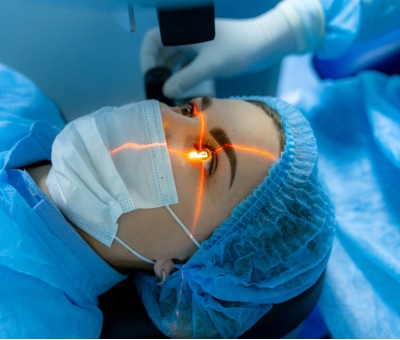
LASIK is a great option for many individuals in Naples or Estero and surrounding areas considering laser vision correction for a variety of very personal and professional reasons. Lifestyle benefits can be tremendous for active and social people. These benefits can enable people to freely pursue their hobbies, sports activities and allow them to see the great sights and sounds that the Southwest Florida area has to offer.
Before your LASIK procedure, it is essential to determine your candidacy. Your candidacy begins with a thorough eye health evaluation to check the overall health of your eye as well as the corneal thickness and shape. To determine your candidacy, schedule a LASIK evaluation at our Naples or Estero location today!
What to Expect at the LASIK Consultation
During your initial screening, Dr. Ginsberg will examine your eyes and perform comprehensive testing to make sure that LASIK eye surgery is the right procedure for you. A medical and eye history will be taken and several tests will be performed, including visual acuity, refractive error, pupil size, eye pressure, general eye health and a detailed corneal evaluation (thickness and shape).
Dr. Ginsberg is not only an experienced LASIK and refractive surgeon but also a fellowship-trained cornea specialist. This specialty makes him the best type of ophthalmologist to determine who is the right candidate for LASIK and who is not. If you are not an appropriate LASIK candidate and still desire freedom from spectacles and contact lenses, he will guide you as to which of the alternative procedures can help you to achieve your visual goals.

CONTACT US TODAY!
Fill out the form below or give us a call at 239.306.7001 for our Naples Location or 239.325.2020 for our Estero Location.
Request a ConsultationLASIK Eye Surgery in Estero and Naples, FL
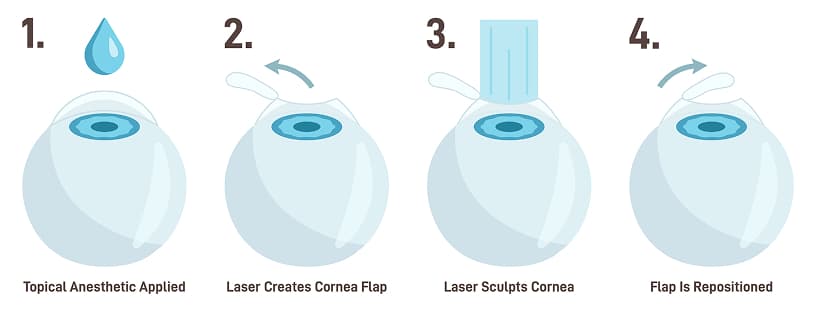
During LASIK surgery at our LASIK in-office suite, your eyes will be numbed using a local anesthetic. Then, Dr. Ginsberg will create a thin, hinged flap on the surface of the cornea. This flap is then gently moved back to expose the inner layers of the cornea. The next step is to use an excimer laser to reshape the eye. This will improve the way that light rays refract onto the retina, allowing for clear vision. Once the eye is properly reshaped, the flap will be smoothed back over.
What Can I Expect After LASIK?
First 24 hours
During your procedure, you will not feel anything because of numbing eye drops. Within a few hours post-surgery, these drops will wear off.
Your eyes might start feeling uncomfortable or sensitive. You should take some ibuprofen and rest for a few hours.
When you wake up, your eyes should feel a lot better. You should still avoid activities that can strain your eyes like reading or using a computer. You will probably notice small improvements to your vision when you wake up.

First Month
The day after your surgery, you will experience better vision. You need to go to your follow-up appointment the next day to make sure that your eyes are healing correctly.
Dr. Ginsberg will instruct you to use eye drops every hour. It is important to follow these instructions as directed. The eye drops help prevent infection and inflammation.
Also, it is also important to use artificial tears to help keep your eyes moist. After LASIK, it’s likely that your eyes will feel more dry than normal. If you are experiencing symptoms of dry eye syndrome, artificial tears can make a difference.
Within the first week, you should skip touching your eyes. They will be sensitive and still healing. This includes keeping things out of your eyes like soap or face wash in the shower.
If you are near contaminated water (rivers, pools, hot tubs, etc.), you should keep it away from your eyes too. Other things to keep away from your eyes include mascara, eyeliner, brushes, and creams. This helps prevent infections. For the best results, you shouldn’t wear any makeup for at least the first week or two after LASIK.
You can start exercising within a week of having LASIK, but use machines and keep sweat out of your eyes.
Around two weeks post-LASIK, you will not need the eye drops, but you might still need the artificial tears. By the end of the first month, you can take part in contact sports without wearing eye protection. Until then, make sure to wear goggles to keep your eyes safe. By the end of the first month, you won’t even remember what wearing glasses or contacts was like.

